
Colombia
Beyond the warnings, three weeks in this beautiful country

After Costa Rica, we continued south into South America, visiting the continent for the first time. Our Colombian leg was a three-week journey. While Colombia had been on our bucket list for a while, I recently worried that visiting might be unwise due to crime and political risk. As many know, Venezuela has been in the news recently regarding the contested presidency of Nicolás Maduro. This, along with U.S. actions involving drug vessels leaving Venezuela, heightened my concerns—especially with Maduro’s arrest occurring just weeks before our arrival. Consequently, we shortened our trip and decided against visiting the National Park in the northeast near the Venezuelan border. However, despite the U.S. State Department’s higher travel risk rating, we booked our three weeks and ended up enjoying every bit of it.
Medellin
We traveled from Costa Rica to Medellin, settling for a few nights in the trendy El Poblado neighborhood. We were impressed with this part of the city and loved our stay at The Host Hotel Medellin. Our only issue was being woken up at 4:00 AM by people singing Colombian music outside. At first, it sounded like non-holiday carolers and was a bit annoying, but they actually sounded quite good! We learned the next day that this isn’t uncommon; parties in this lively part of the city often extend into the early morning.
In Medellin, we took a cable car to a mountaintop park. It was a great way to see how the sprawling city climbs the mountainsides, but it also offered a view of the lower-income areas, which helped us remain grounded and respectful of our surroundings. The city uses these cable cars as public transportation—much like a bus or train—to move locals up the steep slopes. While we paid extra to take the line all the way to the park, it was fascinating to see the system in action. After getting a “lay of the land” from the air, we explored the city center to view the famous “plump” Botero statues (which made me feel better about my own added travel pounds!). We also toured Comuna 13. This vibrant neighborhood was once one of the most dangerous in the world. It has an incredible history of transformation; once riddled with violence, locals used street art and community tours to turn it into one of the city’s top tourist attractions.


The Coffee Triangle: Jardin, Manizales & Salento
Next, we headed south by bus to Jardin, a remote town in the “Coffee Triangle” nestled among steep, coffee-covered mountains. Though the bus ride was long, it was fun to watch the scenery and observe our driver, who clearly loved his job—socializing with everyone and picking up locals along the road whether they had a ticket or not. We stayed in a charming Bed & Breakfast within walking distance of both the mountain trails and the town square. Jardin is a “Colonial town,” filled with colorful architecture reflecting its Spanish history. In the evenings, locals gather in the square at brightly painted wooden tables to play games, drink, and eat. Both Tara and I spent time hiking and running on the dirt roads, enjoying the expansive views. I even had an adventure where a local dog followed me for seven miles; I eventually got in touch with the owner and dropped the dog off with their friends in town. We visited a wonderful local coffee farm where the owners walked us through the entire production process, and we even got to pick some beans ourselves. Jardin is a true small-town gem.
From there, a driver took us a few hours south to Manizales for a quick two-night stay. Our hotel was a bungalow hanging off the side of a mountain, which offered great views for a reasonable price. While we didn’t love the city of Manizales itself, we enjoyed the unique lodging—despite the mysterious (and loud) animal scurrying in the ceiling above us!
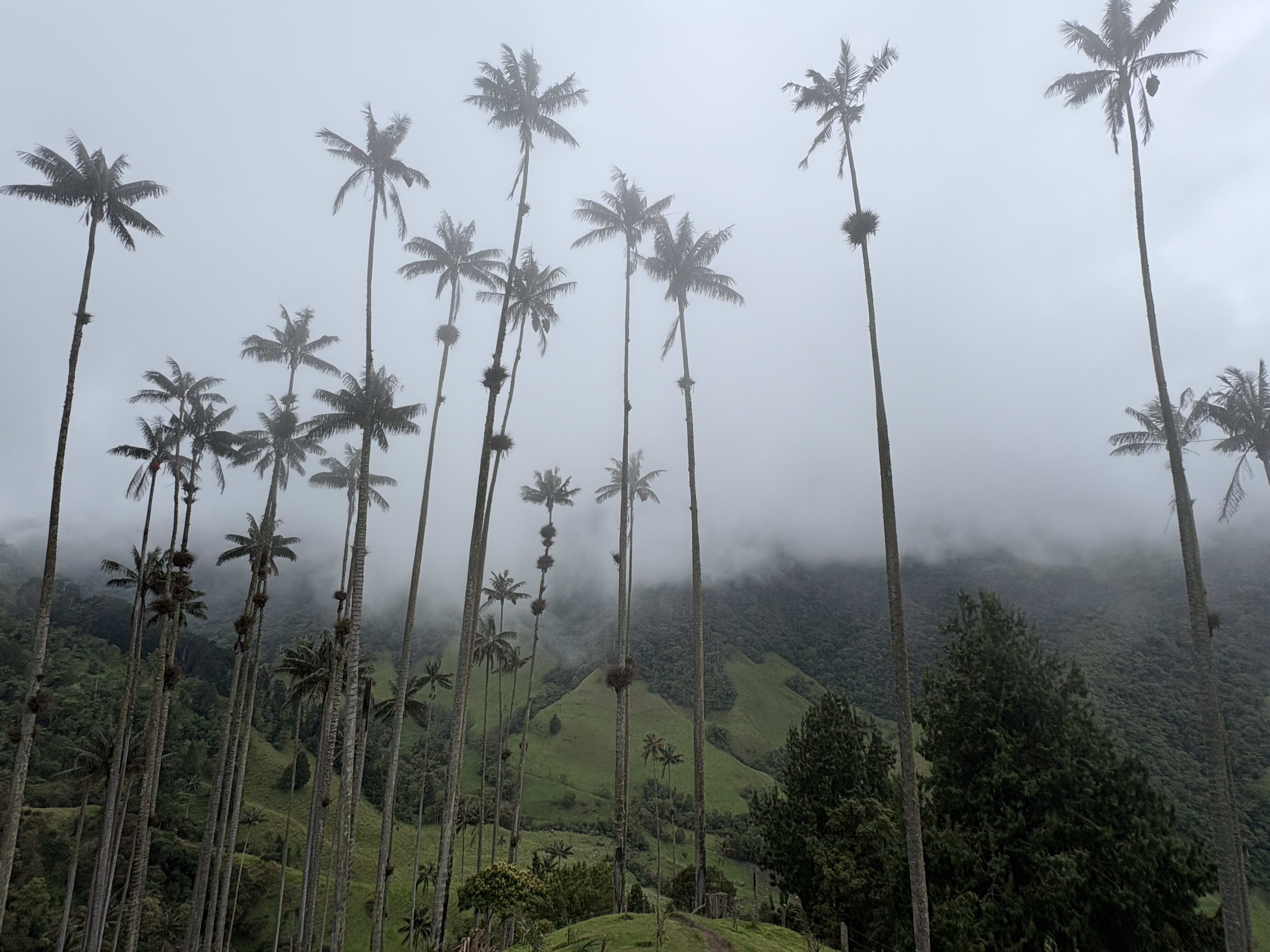
We then moved on to Salento. Like Jardin, it is a colonial town, though much more touristy and lacking some of Jardin’s local charm. However, Salento is the gateway to the Cocora Valley, a protected area featuring the world’s tallest palms (Wax Palms). We also tackled the “must-do” Cocora Valley hike. It was beautiful, though our feet ended up completely covered in mud due to recent rains and a lack of trail maintenance. Salento is also famous for its “Willys” (WWII-era Jeeps) used as shuttles. As a former Jeep guy, I was amazed to see them carrying 14 people at a time, with several hanging off the back!


The Coast: Baru & Cartagena
From Salento, we flew to the northern city of Cartagena and took a car to Baru to stay at a remote resort called Las Islas. This place was incredible; our bungalow was a luxury treehouse. There are no cars at the resort, so you get around by foot, bike, or golf cart. The area had been hit hard by storms just before we arrived, and the road to Baru was in such bad shape that I actually had to get out of our taxi to help push it through wet sand only 15 feet from the sea. The weather canceled some of our planned activities, but we still enjoyed lounging in the treetops and hitting the beach. The resort felt like a setting for a season of The White Lotus, complete with its own private island.
Eventually, we moved into the Walled City of Cartagena. We loved being able to walk to bustling plazas and explore the vibrant food scene. We also spent time in Getsemani, a neighborhood similar to Comuna 13 that has transitioned from a rougher area into a top destination decorated with amazing street art.


After three weeks in Colombia, we left deeply impressed. Our safety concerns never materialized, and we encountered nothing but wonderful people. We could have easily spent more time there and are already looking forward to returning
luckily, the owner had a collar with her whatsapp enabled phone number on it! Whatsapp is the global communication medium!
Love that the dog went on a walk with you but how in the world did you find the owner? Glad you had a great experience!