
Chile!
From amazing mountains to lackluster southern cities

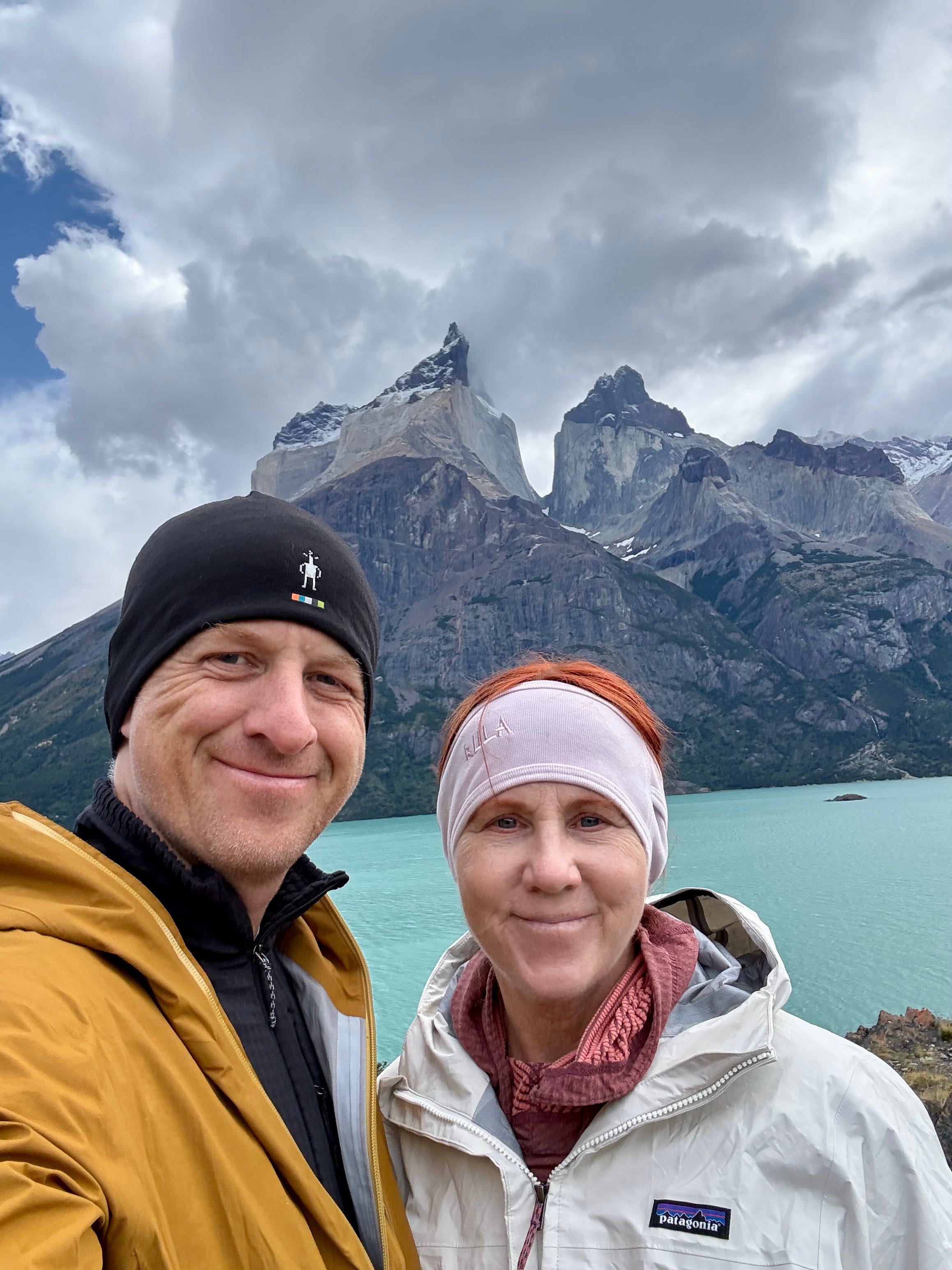
As we continued our trip exploring Patagonia, our next destination was the city of Puerto Natales. Natales is known as the southern gateway for travelers entering Torres del Paine National Park, which is located in Chile but remains part of the broader Patagonian region. The name “Patagonia” originates from the early 16th century—specifically during Ferdinand Magellan’s expedition in 1520—when Europeans first explored the southern tip of South America. Magellan and his crew encountered the indigenous Tehuelche people (also called Aónikenk or Patagones in early accounts). He subsequently named the area Patagonia after these people and the land they inhabited.


Honestly, figuring out the best way to explore Patagonia was a challenge, as it spans two countries and two major national parks. The most popular activity in this park is trekking the “W.” This is a 50+ mile, multi-day backpacking trip that typically takes 4–5 days, with hikers staying in group lodges (refugios), tents, or similar accommodations. Not only were the park accommodations booked well in advance, but sleeping in a tent and backpacking for that long wasn’t on our to-do list this time around. Instead, we chose to stay in town in nicer accommodations and make day trips into the park, much like we did in El Chaltén. However, while the trailhead in Chaltén was only a 10-minute drive away, here in Puerto Natales, we were about 90 minutes out! Regardless, we stayed in a beautiful hotel overlooking a gulf that connects to fjords, which eventually lead to the Pacific Ocean about 100+ miles away by boat. It is a fascinating area where these fjords essentially guard the mainland from the open ocean.


We drove into Torres del Paine a couple of times to see this side of Patagonia and experienced amazing landscapes that almost didn’t look real. I hiked the famous Torres del Paine trail, which was another long trek full of hikers, eventually leading to beautiful views of three mountain towers with a glacial lake below. I was blown away by the vista at the end, but honestly, the number of people on the trail was substantial and took away from the beauty. I assume this trail is the most popular Patagonian day hike, resulting in it being crowded by “W” hikers and individuals arriving by tour bus or car. On my drive back, I gave a couple a ride into town and enjoyed hearing about their multiple days in the park and how they had woken up at 2:00 AM to see the towers at sunrise.
I keep trying to compare this area to somewhere else I’ve been, and the closest would probably be Alaska. It is expansive and wild, yet challenging to access. However, that description is also why both Alaska and Patagonia are great in their own way; in the grand scheme of things, they remain natural landscapes that haven’t been overridden by humans damaging what made them great in the first place.
Puerto Natales wrapped up our time in the national parks of Patagonia and, honestly, I am feeling a bit disappointed. The feeling could be because I hadn’t planned the trip properly to experience this beautiful area “correctly,” or it could be because the area simply isn’t worth the effort (or the high cost) of traveling this far south when expectations are so high. While I am glad we came down here to experience this wild and majestic region, I don’t think it is on our “return” list. It wasn’t bad or a waste of time, but for us, once was enough. I will definitely look at the Patagonia Clothing Co. logo on my clothes a bit differently after this trip.
Moving past Natales, we took another (though shorter) bus to Punta Arenas. Punta Arenas is the southernmost city with a population of over 100,000. It sits on the Strait of Magellan, which used to be much more active before the Panama Canal was created. Speaking of hits and misses, Punta Arenas was definitely a miss. We came here specifically to see the Magellanic penguins via boat, but unfortunately, the trip was canceled due to weather. We did our best to laugh it off and move on. We also tried a Chilean hot dog and agreed that it, too, fell into the “miss” category.
From there, we began our journey back to the States, flying three hours to Santiago. We spent three nights quickly experiencing the capital. We had heard that Santiago could be a bit on the dangerous side, but we never felt unsafe. We rented a car and visited two wineries in the Casablanca Valley. This is a beautiful area with wineries everywhere; the climate is often compared to Southern California, which is why grape production is such a focus. After visiting the wineries and learning about the process in greater detail, Tara “forced our hand” to drive to the coast to experience a Chilean beach not obstructed by fjords. She never wants to miss a beach! It was a great idea, and we saw powerful waves accompanied by great sand. We quickly made our way back to Santiago to catch our flights home.


This completes our travels for the first part of 2026 through Central and South America. We very much enjoyed this trip as it unlocked a whole new region rich in culture, though we would probably say that Costa Rica and Colombia were the highlights and our personal favorites.